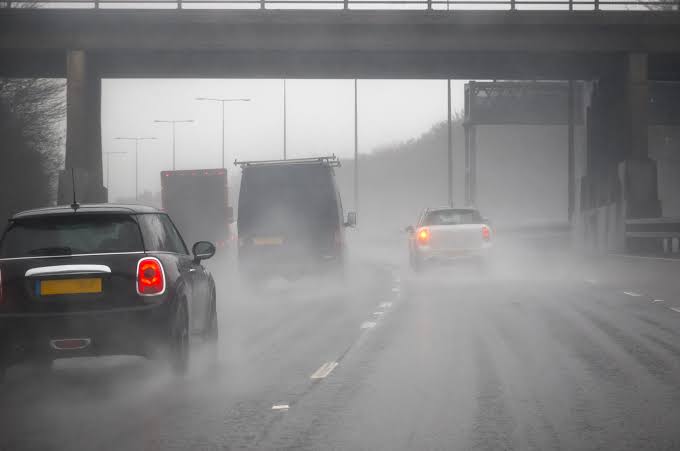
Delay a journey if heavy rain makes the route unsafe. If you must travel, prepare the car, allow more time and decide beforehand that a flooded road means turning back. I would treat driving in heavy rain as a visibility and grip problem, not simply a reason to use faster wipers. These eight checks cover the decisions that matter.
1. Can the journey wait?
Check the Met Office forecast, flood information and official traffic updates for the whole route. Conditions at your destination may differ from those outside your window. An appointment is easier to rearrange than a stranded vehicle.
Look beyond the quickest satnav suggestion. Low bridges, riverside roads and rural dips can become unsuitable. Keep general browsing, including trendsarchive.co.uk, separate from the live information needed for a departure decision. An undated account cannot tell you whether today’s road is passable.
2. Are the tyres ready?
Inspect tyres for damage, tread condition and the correct pressures specified for your vehicle and load. Rain reduces available grip; worn or incorrectly inflated tyres make an already difficult situation worse.
Do this before setting off, not on an exposed roadside after the steering feels wrong. If you are uncertain about a defect, get it assessed rather than assuming a short journey will be harmless.
3. Can you clear every window?
Check front wipers, rear wipers, washers, screenwash and demisters. Clean glass inside and outside, and clear mirrors. A wiper blade that smears in light rain will not improve when spray from a lorry covers the windscreen.
Set the ventilation while parked so you are not searching through controls at speed. Keep wet coats and equipment from obstructing your view or interfering with the pedals.
4. Are your lights appropriate?
Check that the lights work and that you know how to select dipped headlights manually. Daytime running lights may not provide the lighting arrangement needed in poor visibility.
The Highway Code requires headlights when visibility is seriously reduced, generally below 100 metres. Fog lights are only for seriously reduced visibility and must be switched off when it improves. They are not a routine heavy rain accessory.
5. Have you allowed space for driving in heavy rain?
Wet stopping distances are at least double those on dry roads. National Highways advises increasing the following gap to at least four seconds in rain. Leave more where conditions demand it, rather than treating four seconds as a guarantee.
Choose a speed that lets you respond to what you can actually see. A speed limit is not a recommendation for standing water, sharp bends or dense spray. Avoid abrupt braking and steering.
6. Do you know your floodwater rule?
Do not drive through floodwater. Its depth, current and hidden road damage cannot reliably be judged from the driver’s seat. Another vehicle getting through does not establish that your crossing would be safe.
Respect closure signs and find another route. A destination discovered through londonlisting.co.uk can wait; reaching it does not justify ignoring a barrier. Do not let a navigation instruction overrule the road conditions in front of you.
7. Can you recognise lost grip?
If steering becomes unresponsive, water may be preventing the tyres from gripping. The Highway Code advises easing off the accelerator and slowing gradually. Avoid a panicked response with harsh controls.
Watch further ahead for standing water and sudden spray. Give pedestrians, cyclists, motorcyclists and horse riders extra room. They face the same weather without your vehicle’s protection.
If spray prevents you seeing ahead adequately, do not compensate by following another vehicle closely. Its rear lights do not reveal everything beyond it. Reduce speed appropriately and find a safe place away from moving traffic to pause if continuing would mean driving without a usable view.
8. Is your backup plan usable?
Carry a charged phone, warm clothing and essential medication. Decide where you could stop safely if the journey becomes untenable. Never stop in a live traffic lane simply to check directions.
Keep breakdown details readily available rather than relying on finding a business listing through prdirectory.co.uk during a problem. My final check is whether I am willing to delay or turn back.
Follow official road closures and emergency instructions; no checklist makes a flooded road safe to drive through.